Know what is on the shelf — in every branch
Every receipt, sale, transfer and write-off changes the stock immediately. You see what is running out, how much to order and what you owe each supplier.
Receiving goods
Receive goods by hand or from the supplier's RS.GE waybill — no retyping.
- Supplier invoices, debts and payments in one place.
- If a supplier's barcode differs from yours, the mapping is remembered and applied to that supplier's later waybills.
- Cost price per batch, including customs duty and transport when needed.
Stock and control
- Stock is counted separately in each branch: received minus sold.
- Stock counts: counted quantities are compared with the system, shortages are written off and surpluses received.
- Product history: every receipt, sale, transfer and correction in one list.
- Expiry report — see what is about to expire.
Branches and purchasing
- Transfers between branches of the same organization, with RS.GE waybills.
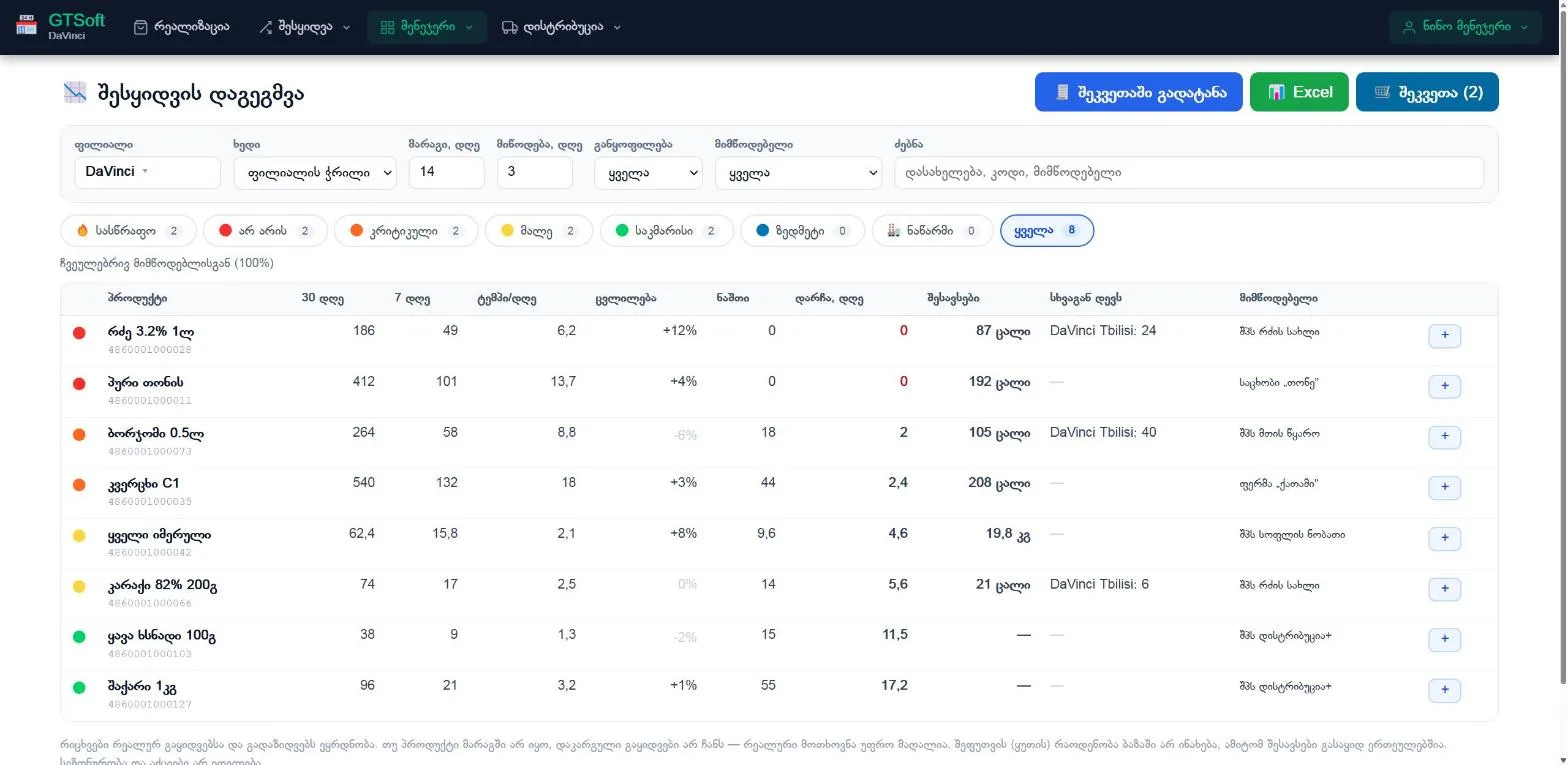
- Purchase planning: what will run out and how much to order, based on sales and transfer rates.
- A product can be defined once for the whole organization, while price and stock stay per branch.
Frequently asked questions
Can I receive goods from an RS.GE waybill?
Yes. The supplier's waybill comes straight into receiving and becomes a stock receipt — no manual typing.
How is the cost price calculated?
With FIFO batches: each receipt is a batch with its own price, and a sale uses the oldest batch first. Profit is therefore calculated from the real purchase price.
Can I manage several branches?
Yes. One organization can have several branches: each has its own stock, prices and cashiers, and reports can be viewed together or per branch.